Fulvic acid is the one number almost every shilajit label quotes. It’s also the number almost nobody defines. Ours reads 35g/100g by titration, batch 250915, measured by Qarshi Research International between 28 November and 8 December 2025. But it carries less information than the marketing around it suggests, and that’s worth knowing before you pay for a percentage.
Most things on a supplement label have a formula. Caffeine is C8H10N4O2 whether you buy it in Durban or Denver. Fulvic acid doesn’t work like that. It’s a family of thousands of organic compounds left behind when plant material breaks down very slowly, and chemists sort them by how they behave rather than by what they are.
The sorting method is old and blunt. Take decomposed organic matter, treat it with alkali, then acidify whatever dissolved. What stays in solution at every pH gets called fulvic acid. What falls out when you add acid is humic acid. What refused to dissolve in the first place is humin.
| Fraction | How it separates | Rough character |
|---|---|---|
| Fulvic acid | Stays dissolved in both alkali and acid | Smaller molecules, more oxygen, water-soluble across the pH range |
| Humic acid | Dissolves in alkali, drops out when acidified | Bigger and darker, slow to dissolve |
| Humin | Won’t dissolve in either | The heavy residue, bound tightly to minerals |
So fulvic acid is defined by a procedure rather than by a structure. That one line explains nearly everything strange about the percentages printed on shilajit jars. The fulvic fraction carries plenty of oxygen in carboxyl and phenolic groups, which is why it dissolves at any pH and grabs metal ions so easily. Whether that does anything worth paying for once you’ve swallowed it is a separate question, and a thinner one than the internet lets on.
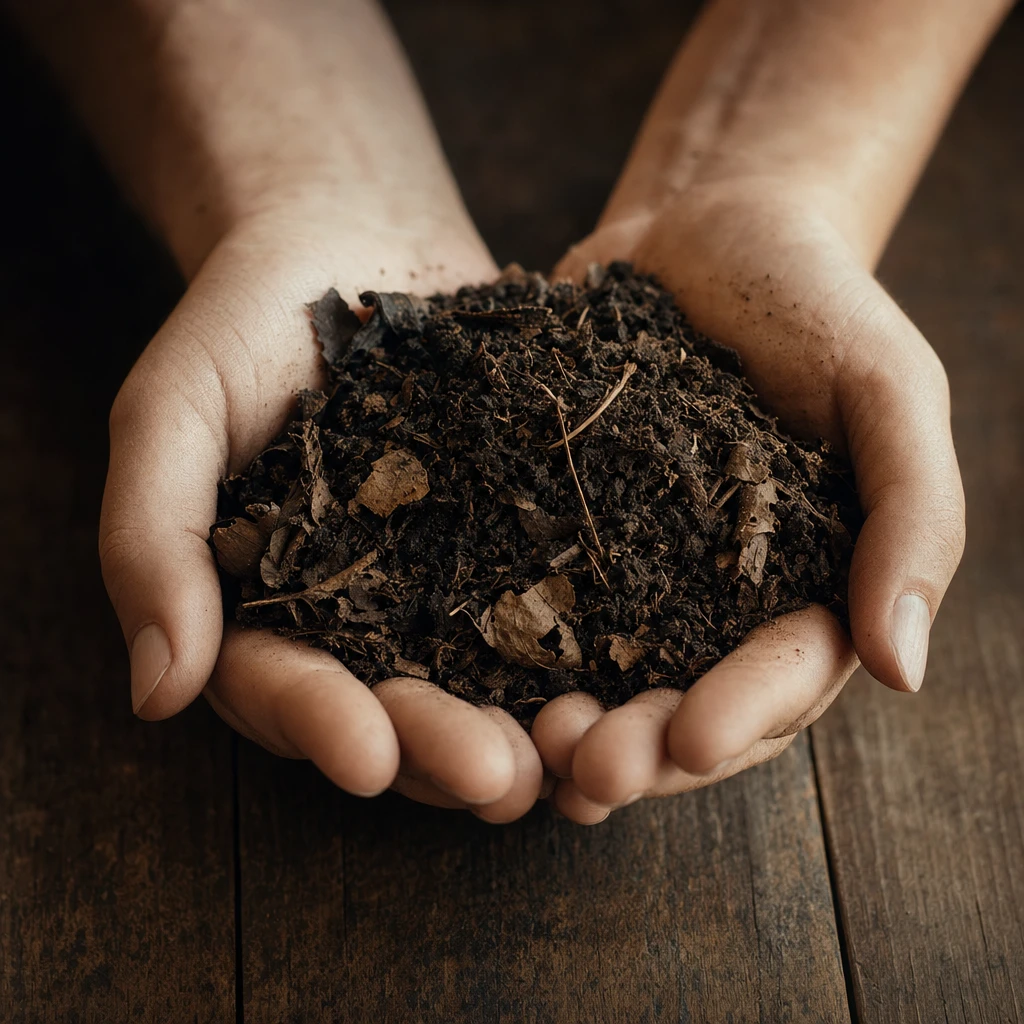
Shilajit starts as plant matter. Mosses, lichens and whatever else clings to thin soil high in the Himalayas gets trapped in rock crevices and pressed there for a very long time. Cold slows the decay. Microbes work on it anyway, and over centuries the easy parts go first: sugars, proteins, simple carbohydrates. What survives is the stubborn aromatic residue, and that’s where the humic substances and the fulvic fraction sit. In summer the rock warms, the material softens, and it seeps out of the seams as a sticky black exudate. Collectors scrape it off the rock face by hand, at altitudes where nothing much else is growing.
Two consequences follow. Fulvic content depends on what grew there, which rock it sat in and how long the process ran, so it shifts from seam to seam and season to season. And because the stuff came out of rock, it can carry what rock carries: lead, arsenic, cadmium, mercury. That’s why we’d read the heavy metals results before the fulvic line. Ours came back not detected on all four by AOAC 999.10/11.
Because resin is impossible to judge by eye. Every jar of it is black and sticky and photographs the same way, so buyers wanted one figure to compare and sellers needed one figure to compete on. Fulvic acid was the only candidate with a laboratory smell about it. Protein powder has grams of protein per scoop. Shilajit got a fulvic percentage.
Then the number did what numbers do in a market with no referee. It went up. You’ll find South African listings claiming 50%, 60%, even 80% fulvic acid on jars priced at R13 a gram, with no laboratory named and no method stated. Genuine raw resin usually measures somewhere between 15 and 35% depending on the assay. A label claiming 80% is describing a standardised extract, an unusual test method, or a creative writer. We’ve written a whole post on the label-claim side of this. Reading percentages properly is the fastest way to sort the honest sellers from the rest.
An opinion now, and plenty of people in this business would argue with it. On a lab report, the fulvic acid result is the third most useful line, behind the batch number and the heavy metals panel. Brands that sell on fulvic percentage put it first, and we reckon that’s backwards. The fulvic figure describes composition. The other two tell you whether the jar in your hand is the jar that was tested, and whether it came back clean.
A high fulvic reading doesn’t prove the resin is clean. A 2025 analysis in BMC Chemistry looked at six commercial shilajit products and found thallium in five of them (Kamgar et al., PMID 39827344). And it doesn’t tell you where the material was collected. It doesn’t even prove the jar holds resin, since fulvic acid is also extracted from leonardite, peat and shale, sold cheaply as drops, and perfectly capable of lifting a blended product’s number.
The research doesn’t rescue the percentage either. Most of the positive shilajit trials used PrimaVie, a standardised extract, rather than raw resin. Keller 2019 in JISSN, for instance, followed 63 active men on 500 mg a day for 8 weeks and reported strength retained under fatigue (PMID 30728074). Small samples, some manufacturer funding, a limited evidence base overall. A 2026 open-label pilot in Cureus did use resin, giving it to 25 healthy young men for 28 days, and reported strength and fatigue improvements with total testosterone unchanged. Nobody has run a trial putting a high fulvic resin up against a low fulvic one in people. So when a brand implies its 80% beats someone else’s 30%, that’s a chemistry result wearing a performance costume.
If fulvic acid is defined by a procedure, then the procedure is part of the claim. The common approaches don’t measure the same physical thing:
Send one jar to three laboratories running those three methods and you can get three different percentages, all defensible, nobody cheating. It’s what happens in an industry that never agreed on a reference method. It also means holding our 35% against someone’s 60% isn’t the like-for-like comparison it looks like, unless both results name the method and both used the same one. And of the three, the colourimetric route is the one we’d trust least on a jar of resin, because a leonardite standard isn’t the material being measured.
The spread shows up on the retail side too. Independent testing in the United States found fulvic acid per serving ranging from under 7 mg to more than 2 200 mg across shilajit products, a 300-fold gap in a category where every label sounds equally sure of itself. Our solubility result, 97.2g/100g by gravimetric assay, is the more useful number for a buyer: it tells you whether the resin dissolves in your mug or leaves grit at the bottom.
Which is why we print the method beside the number, every time. If that figure moves next time, the new one goes up with its method beside it, and how we test is written out in full.
No. Fulvic acid is one fraction of what sits inside shilajit, alongside humic substances, minerals and a long list of other organic compounds. You can buy fulvic acid on its own, usually extracted from peat or leonardite, and it’s a different product at a much lower price.
Roughly 15 to 35% for purified raw resin, depending on the assay used. Ours measured 35g/100g by titration. Numbers well above that band normally point to a standardised extract, or to a method the seller hasn’t named.
Usually because they ran different test methods. Occasionally because one of them ran no test at all. The compound class is defined by the extraction procedure, so changing the procedure changes the answer, and a percentage with no method beside it is a number without a meaning.
Not on its own. No trial has compared high fulvic resin against low fulvic resin in people, so the figure describes composition rather than effect. Clean heavy metals results and a number you can trace back to the jar in your hand tell you more about what you’re taking.
Open the seller’s lab report and find the fulvic acid result. Three checks: a named laboratory, a batch number and test date on the report, and a test method written beside the percentage. Miss any one of those and it’s decoration. Ours is on the lab results page in full, from a laboratory accredited to ISO/IEC 17025 and an ILAC member. If you want the resin once you’ve read it, the 40g jar at R999 is R25 a gram and lasts about 100 days at a pea-sized daily dose, delivered free and tracked in 1 to 3 working days.
The label-claim side of this is covered in why a 50 to 80 per cent fulvic claim is a red flag, the numbers themselves are on the certificate page, and the jars are in the shop.
A complementary product, not a medicine. Pregnant or breastfeeding women, and anyone on chronic medication, should speak to a health professional first.
We publish the full laboratory report for the batch shipping now, with the method named beside every result. Read it in full.
See the certificate